
A Sensitive-Skin Guide
Last updated: 26 September 2026
- “Gentle.”
- “Natural.”
- “Sensitive.”
- “Hydrating.”
Dog shampoo bottles can say a lot on the front. But if your furkid has sensitive skin, how do you know what actually matters?
🐾 Quick answer
When choosing a shampoo for a dog with sensitive skin, don’t judge it by one ingredient or one marketing word. Look at the whole product:
- Is it actually formulated for pets?
- What is the shampoo designed to do?
- Does the brand clearly explain its ingredients?
- Does the formula contain added fragrance or essential oils?
- Is it an everyday grooming shampoo or a medicated product?
- Does your furkid’s skin respond well to it?
And remember: “natural” doesn’t automatically mean gentle, and an unfamiliar chemical name doesn’t automatically mean harmful. The formula matters more than fear around a single ingredient.
In this article
Step 1Make Sure It’s Made for Your Furkid
Sounds obvious. Still worth checking. For routine baths, choose a product formulated specifically for pets rather than reaching for human shampoo.
As we explained in our guide to human shampoo and dog skin, dogs and humans have different skin characteristics, and veterinary guidance recommends pet-formulated products for routine bathing.
🐱 Have cats at home too?
Don’t automatically assume that something labelled for dogs can also be used on cats. Cats can be particularly sensitive to certain substances, and some products intended for dogs should never be used on them.
The simplest rule: only use a product on your cat if the label specifically says it’s suitable for cats.
And never apply concentrated essential oils directly to your furkid unless directed by a veterinary professional. Pet Poison Helpline notes that concentrated tea tree oil, for example, can cause serious poisoning in dogs and cats; the risk depends heavily on concentration and exposure.
Step 2Ask What the Shampoo Is Actually For
Before decoding every ingredient, ask a simpler question: what job is this shampoo supposed to do?
The Merck Veterinary Manual describes three broad classes of animal shampoos: cleansing, antiparasitic and medicated. That distinction matters.
Source: Merck Veterinary Manual →
- 🛁 Everyday cleansing shampooDesigned primarily to clean the skin and coat. This is where you’d generally look for a gentle formula that suits your furkid’s routine.
- 🩺 Medicated shampooDesigned for particular skin conditions, and may contain active ingredients chosen for a specific reason. VCA notes vets may prescribe them for bacterial skin infections, yeast infections and allergies.
- 🪲 Antiparasitic shampooDesigned around parasite control rather than everyday coat cleaning.
Read VCA’s medicated shampoo guide →
Step 3Don’t Judge a Shampoo by One Ingredient
This is probably the most important part of this guide. Social media makes ingredient checking sound simple: ingredient X = good, ingredient Y = bad. Real formulations aren’t quite that easy.
An ingredient’s role depends on its concentration, how it’s formulated with other ingredients, how the finished product is used and the individual animal. So if you spot a long chemical name you don’t recognise, don’t panic. Instead:
- Check what the ingredient does
- Look at the overall product purpose
- Check the manufacturer’s directions and warnings
- Ask the brand if something isn’t clear
- If your furkid has a diagnosed skin condition, ask your vet
💡 Eggie rule of paw
Unfamiliar doesn’t automatically mean unsafe. And natural doesn’t automatically mean gentle.
Step 4Know What Common Ingredients Are Doing
You don’t need to become a cosmetic chemist. It helps, though, to understand a few common ingredient jobs.
💧 Humectants & moisturising ingredients
These are included in formulations to help with moisture and conditioning. You may see ingredients such as:
- Glycerin
- Hyaluronic acid / sodium hyaluronate
- Aloe-derived ingredients
Rather than asking whether a shampoo simply contains one of these, look at how the brand describes the overall formulation and its intended use.
🌾 Oat-based ingredients
Oat-derived ingredients are commonly seen in products positioned around gentle or sensitive-skin care. But again, one nice-looking ingredient doesn’t define the whole bottle.
🫧 Surfactants
Here’s a word worth learning. Surfactants are cleansing ingredients. They help water interact with oils and dirt so these can be washed away. Merck describes surfactants as compounds used as detergents and wetting agents, among other functions.
Source: Merck Veterinary Manual →
Different surfactants have different properties, and finished shampoos commonly use combinations of ingredients. So rather than hunting for a shampoo with “no chemicals” (everything in the bottle is chemistry), look for a product formulated specifically for pets and appropriate for its intended use.
Step 5Look Beyond “Natural”
We love plant-based goodness. 🌿
But when choosing a shampoo for your furkid, “natural” is only one part of the picture. What matters is how the ingredients are chosen, what role they play, and how the complete formula comes together.
Naturally derived ingredients can be a lovely part of a gentle-care routine, alongside thoughtful formulation, pet-friendly cleansing and ingredients chosen with your furkid’s skin and coat in mind.
Look at the whole formula
Rather than choosing a shampoo based on one word on the front of the bottle, consider:
- Is it formulated specifically for pets?
- Does it suit your furkid’s skin and coat needs?
- Does the brand clearly share what’s inside?
- Does the formula match what you’re looking for?
It’s about creating clean, gentle care we’d feel good using on our own furkids. 💛
Step 6What About Fragrance?
For a sensitive-skin furkid, fragrance is worth considering, but we wouldn’t tell you that every fragranced shampoo is automatically bad. Instead, check what the brand actually says.
Does it contain…
- Added fragrance?
- Essential oils for scent?
- No added fragrance?
And don’t confuse these two:
“No added fragrance”
Nothing has been added just for scent.
Is not the same as
“This product has absolutely no aroma.” Ingredients themselves can have a natural scent.
For pawrents who prefer a simpler routine for sensitive noses and skin, no added fragrance can be a useful product characteristic to look for.
Step 7Be Careful With Essential Oils
“Plant-based” doesn’t automatically mean appropriate for every furkid. Essential oils are concentrated substances, and safety varies considerably depending on the particular oil, concentration and exposure.
For example, Pet Poison Helpline warns that concentrated tea tree oil can be toxic to pets, while properly formulated pet products containing very low concentrations aren’t the same as applying concentrated oil directly. That’s an important distinction.
Not the takeaway
“Essential oil = poison.”
The takeaway
Don’t DIY concentrated essential oils on your furkid just because they’re natural. And always check a product is formulated for the species you’re using it on.
Step 8What About SLS, Parabens and Other “Free From” Claims?
You’ll see plenty of labels saying:
- SLS-free
- Paraben-free
- No added fragrance
These claims tell you something factual about what the manufacturer has chosen not to include. But they don’t automatically prove that a product is safer or better.
Surfactants, for example, perform an important cleansing function. What matters is the finished formulation, not whether one particular surfactant appears on an internet “avoid” list.
That’s why at Eggie & Friends, we’d rather tell you what we’ve chosen to formulate with and without, and let you understand why, than tell you every ingredient outside our bottle is “bad.”
Step 9Check the Directions Too
Don’t stop at the ingredient list.
Read the label for
- How much to use
- How to apply it
- Whether dilution is required
- How long it stays on the coat
- How thoroughly to rinse
- Which species it’s suitable for
- Any warnings or precautions
The best shampoo can still be used incorrectly. And medicated shampoos are especially different: VCA notes they may need a specific contact time and bathing frequency for the condition being treated.
Source: VCA Animal Hospitals →
Follow the bottle. And when it’s prescribed, follow your vet.
The 30-Second Shampoo Check 🐾
Standing in the pet shop comparing bottles? Don’t overthink it. Ask these six questions:
- Is it made for my furkid’s species?
- What is it designed to do?Everyday cleansing, medicated treatment or something else?
- Does the brand clearly explain the formula?
- Does it fit my preferences?For example, no added fragrance or no added essential oil.
- Are the directions and warnings clear?
- How does my furkid’s skin actually respond?
That’s much more useful than trying to memorise a giant blacklist of ingredients.
What Should I Look for in a Shampoo for a Dog With Sensitive Skin?
If your furkid has generally sensitive skin but doesn’t have a diagnosed medical skin condition, consider an everyday shampoo that:
- Is formulated specifically for pets
- Clearly states which species it is intended for
- Has transparent ingredient information
- Uses a cleansing system intended for regular grooming
- Fits your fragrance preferences
- Provides clear directions
- Comes from a brand willing to answer questions about its formulation
If your dog has persistent itching, redness, sores, hair loss, crusting or recurring skin problems, shampoo shopping shouldn’t be your first step. Talk to your vet.
The right product can support a grooming routine. It can’t diagnose what’s causing the problem.
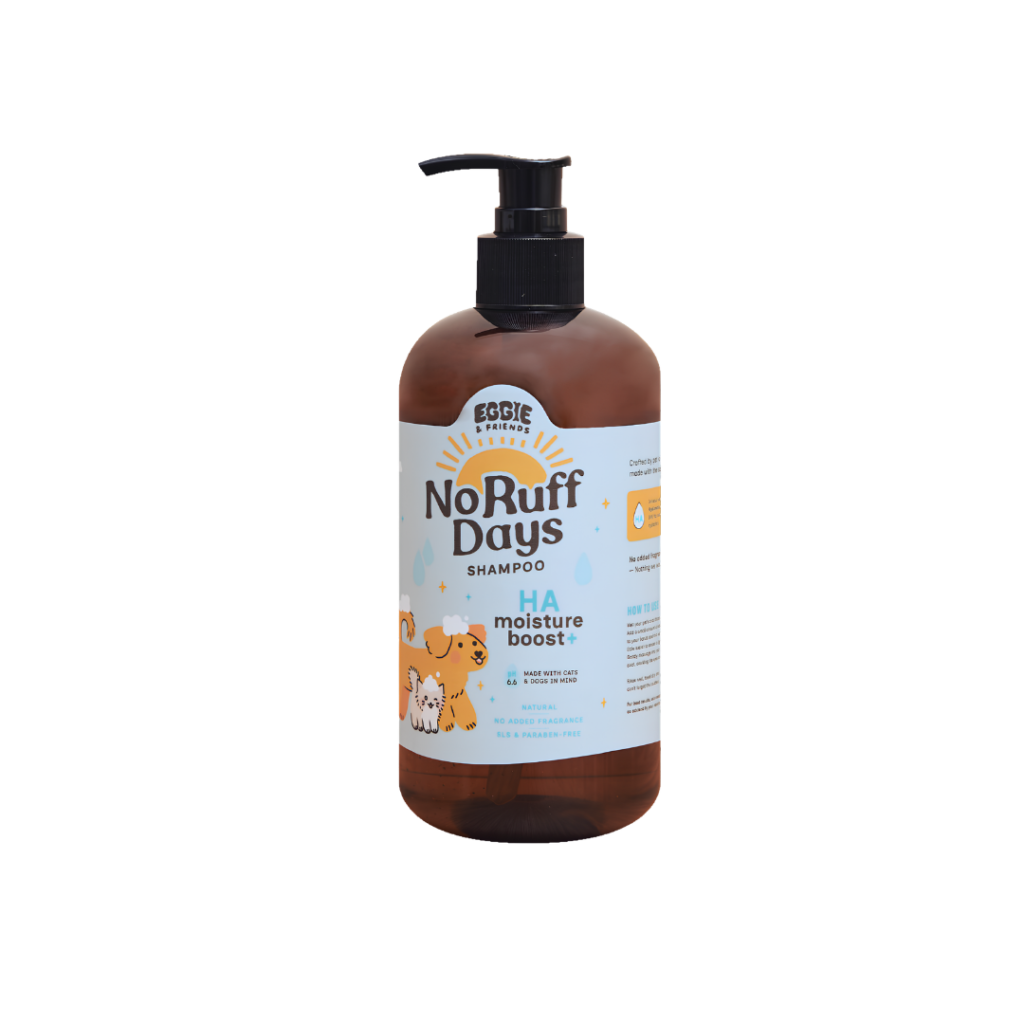
Where No Ruff Days fits 💛
Tell pawrents what’s inside. Tell them what’s not.
Simple, gentle everyday care, without trying to make bath time smell like a perfume counter. And no ingredient scare tactics.
- pH 6.6
- No added fragrance
- No added essential oil
- SLS-free
- 90%+ naturally derived
- For dogs & cats
A grooming shampoo, not a medicated treatment. If your vet has prescribed a shampoo or bathing schedule, follow their advice.
Pawrents Also Ask 🐾
What shampoo is good for a dog with sensitive skin?
Look for a shampoo formulated specifically for pets with transparent ingredients and clear directions. Rather than choosing based on one “hero ingredient,” consider the entire formulation and how your dog’s skin responds. Dogs with persistent or diagnosed skin problems should follow their veterinarian’s recommendations.
What ingredients should I avoid in dog shampoo?
There isn’t a universal blacklist that applies to every dog shampoo. Safety depends on the ingredient, concentration, formulation, intended species and how the product is used. Avoid products not intended for your pet’s species and don’t apply concentrated essential oils or household products without appropriate guidance.
Is natural dog shampoo better for sensitive skin?
Not automatically. “Natural” describes ingredient sourcing more than how your individual dog will respond to a finished product. Plant-derived substances can also irritate or be harmful depending on the substance, concentration and use.
Is fragrance bad for dogs with sensitive skin?
Not every fragranced pet shampoo is automatically harmful. However, pawrents with sensitive-skin or sensitive-nose furkids may prefer products with no added fragrance. If your dog repeatedly develops irritation after using a product, stop using it and speak with your veterinarian.
Are essential oils safe in dog shampoo?
It depends on the particular essential oil, concentration, formulation and species. Concentrated essential oils should not be applied directly to pets without appropriate guidance. Products formulated for pets at appropriate concentrations are different from using concentrated essential oils at home.
Is SLS bad for dogs?
You shouldn’t judge a finished shampoo by the presence or absence of one surfactant alone. Surfactants are cleansing ingredients, and their properties depend on the formulation and concentration. If you prefer an SLS-free product, that can be a purchasing preference, but “SLS-free” alone doesn’t prove that a shampoo is safer.
Does dog shampoo need to show its pH?
A stated pH can provide useful information, but pH alone doesn’t determine whether a shampoo is appropriate for your dog. As we explain in our pH guide, canine skin pH also varies between dogs and body locations.
The Simple Rule
The best dog shampoo label isn’t necessarily the one with:
- The shortest ingredient list
- The most botanical-looking ingredients
- The biggest “NATURAL” on the front
It’s the one you can understand.
- Know what the product is for
- Know which species it’s made for
- Understand the claims
- Read the directions
- Pay attention to your furkid
Don’t shop by fear. Shop by understanding. 💛
Sources & References
- Merck Veterinary Manual, Principles of Topical Treatment in AnimalsCleansing, antiparasitic and medicated shampoos and topical treatments.
- Merck Veterinary Manual, Surface-Active Compounds (Surfactants)What surfactants are and how they work as detergents and wetting agents.
- VCA Animal Hospitals, How to Bathe Dogs With Medicated ShampooWhy medicated shampoos are prescribed and how their use differs from everyday grooming shampoos.
- Pet Poison Helpline, Tea Tree OilRisks of concentrated tea tree oil exposure in pets.
This article is for general educational information and isn’t a substitute for veterinary diagnosis or advice.